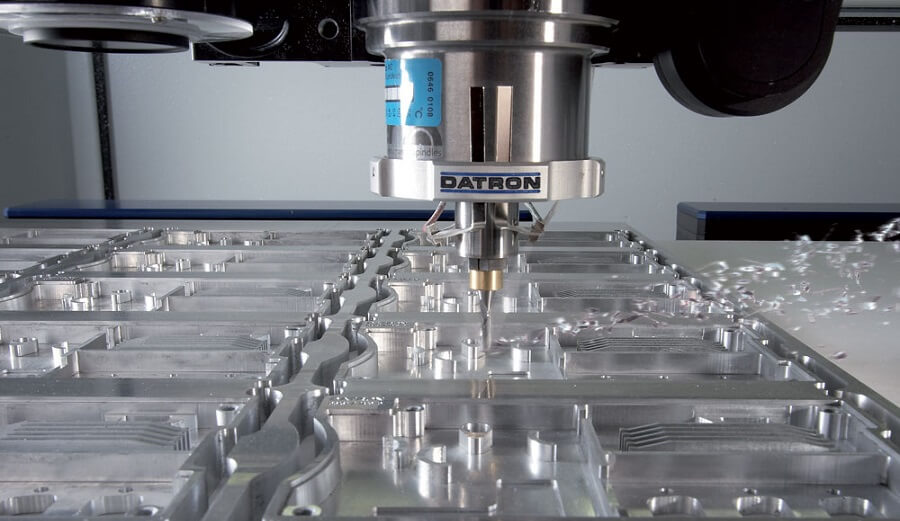
In the modern manufacturing industry, the choice between CNC precision machining and manual machining is a critical decision that affects production efficiency, cost, quality, and scalability. Both techniques have their distinct advantages and limitations, and understanding these differences is crucial for businesses aiming to optimize their manufacturing processes. This article explores the detailed comparison of CNC precision machining and manual machining, highlighting their key features, benefits, drawbacks, and practical applications.
Understanding CNC Precision Machining
CNC precision machining refers to the use of computer numerical control (CNC) machines to perform highly accurate manufacturing processes. These machines are programmed using specialized software to cut, drill, mill, or shape materials according to precise specifications. The main advantage of CNC precision machining lies in its ability to deliver consistent, repeatable results with minimal human intervention.
CNC machines can handle complex designs with extreme accuracy, making them ideal for industries where precision is critical, such as aerospace, automotive, medical devices, and electronics. They operate using digital instructions that control movement along multiple axes, enabling intricate shapes and patterns that would be difficult or impossible to achieve manually.
Understanding Manual Machining
Manual machining, also known as conventional machining, involves the direct operation of tools such as lathes, mills, drills, and grinders by skilled machinists. In this process, the machinist manually controls the cutting, shaping, and finishing of the workpiece, relying on experience and skill to achieve the desired outcome.
Manual machining is highly versatile and can be adapted to a wide range of tasks without extensive programming. It is particularly useful for custom or low-volume production, prototyping, and situations where flexibility is essential. However, the quality and precision of manual machining are highly dependent on the operator’s expertise and attention to detail.
Accuracy and Precision
When it comes to accuracy and precision, CNC precision machining clearly has the upper hand. CNC machines follow programmed instructions with exact movements, often achieving tolerances within microns. This level of precision is challenging to replicate consistently with manual machining, especially for complex geometries or high-volume production.
Manual machining, while capable of producing high-quality results, is prone to human error. Even experienced machinists may struggle to maintain consistent tolerances over long production runs. This makes CNC precision machining the preferred choice for applications requiring repeatability and tight specifications.
Efficiency and Productivity
CNC precision machining significantly enhances efficiency and productivity. Once a CNC program is set up, machines can operate continuously with minimal supervision, producing multiple identical parts quickly. This automation reduces production time, lowers labor costs, and allows manufacturers to meet high-volume demands more effectively.
Manual machining, on the other hand, is more time-consuming. Each part requires direct attention from a machinist, making large-scale production slower and more labor-intensive. While manual machining offers flexibility for custom tasks, it cannot match the speed and consistency of CNC precision machining in high-volume environments.
Flexibility and Customization
Manual machining offers greater flexibility for unique or one-off parts. Skilled machinists can adjust techniques on the fly, modify designs during the production process, and adapt to unforeseen challenges without needing to reprogram a machine. This makes manual machining highly suitable for prototypes, experimental designs, or low-volume production where customization is key.
CNC precision machining, while highly automated, is less adaptable once a program is written. Changes to the design often require reprogramming and setup adjustments, which can be time-consuming. However, CNC machines excel in producing complex geometries and repetitive tasks with high precision, which may be difficult to achieve manually.
Cost Considerations
The cost dynamics between CNC precision machining and manual machining vary depending on production scale, complexity, and labor. CNC machines require significant upfront investment in equipment and software. Programming and setup also require trained personnel, adding to initial costs. However, for high-volume production, CNC machining reduces labor costs, minimizes errors, and improves throughput, making it cost-effective over time.
Manual machining generally involves lower initial costs, as conventional tools are less expensive than CNC machines. Labor costs, however, are higher because skilled machinists must be employed for direct operation. For low-volume or custom projects, manual machining can be more economical due to its flexibility and lower capital investment.
Skill Requirements
CNC precision machining relies heavily on technical skills related to programming, software operation, and machine maintenance. Operators must understand G-code, CAD/CAM software, and machine operations. While less physical labor is required, CNC machining demands technical proficiency and problem-solving abilities.
Manual machining requires hands-on skills, dexterity, and extensive experience. Machinists must understand tool selection, cutting speeds, material behavior, and finishing techniques. The quality of the output depends significantly on the operator’s skill level, making training and experience crucial for successful manual machining.
Applications in Industry
CNC precision machining is widely used in industries where precision, repeatability, and high-volume production are critical. Aerospace components, automotive parts, medical instruments, and electronics often rely on CNC-machined parts for their intricate designs and tight tolerances. CNC precision machining also supports advanced materials, including titanium, stainless steel, and high-performance alloys.
Manual machining is often preferred for prototyping, custom parts, repair work, and low-volume production. Its adaptability makes it valuable in workshops, specialized manufacturing, and educational environments where hands-on training is important. Manual machining can handle a broad range of materials and is suitable for operations that require a personal touch or rapid modifications.
Maintenance and Longevity
CNC machines require regular maintenance, calibration, and software updates to maintain performance. Preventive maintenance is critical to avoid downtime, and specialized technicians may be needed for repairs. While this adds operational complexity, proper maintenance ensures long-term reliability and consistent quality.
Manual machines generally have simpler mechanisms, making them easier to maintain and repair. However, the longevity of manual machining depends on the quality of the tools and the skill of the operator. Over time, wear and tear can affect accuracy if the machines are not properly cared for.
Conclusion
Both CNC precision machining and manual machining have their unique strengths and weaknesses. CNC precision machining excels in precision, efficiency, repeatability, and high-volume production, making it indispensable in modern industrial manufacturing. Manual machining, with its flexibility and adaptability, remains valuable for custom projects, low-volume production, and prototyping.
Choosing between CNC precision machining and manual machining depends on several factors, including production scale, design complexity, budget, and required tolerances. For businesses seeking speed, accuracy, and consistency, CNC precision machining is the optimal choice. Conversely, for projects that demand adaptability, personal expertise, and lower initial investment, manual machining is often more suitable.
Ultimately, understanding the capabilities and limitations of each method allows manufacturers to make informed decisions that optimize both quality and cost-efficiency in their production processes. Integrating CNC precision machining where precision and efficiency are critical, while retaining manual machining for specialized or custom tasks, can provide the best of both worlds in a modern manufacturing environment.